Combustion is a key concept in Secondary 2 Science and appears frequently in chemical reaction questions at Upper Secondary Chemistry. Many students struggle not because the topic is difficult, but because they misunderstand what actually defines a combustion reaction.
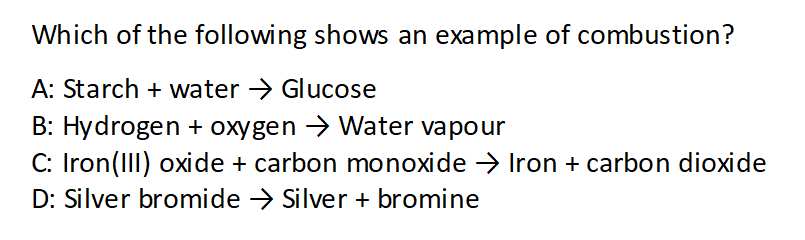
Which of the following shows an example of combustion?
A: Starch + water → Glucose
B: Hydrogen + oxygen → Water vapour
C: Iron(III) oxide + carbon monoxide → Iron + carbon dioxide
D: Silver bromide → Silver + bromine
A combustion reaction occurs when a substance reacts with oxygen.
In most cases, this reaction produces heat and light, making it a rapid chemical reaction. At Upper Secondary level, this is often linked to exothermic reactions, but at the foundational stage, the key idea remains simple: oxygen must be present as a reactant.
To identify combustion reactions in chemical equations, focus on the left-hand side of the equation. Check whether oxygen is involved as a reactant. If oxygen appears and reacts with another substance, the reaction is likely a combustion reaction.
Looking at the options above, only one equation shows oxygen reacting directly with another substance. This simple identification method helps students avoid confusion when distinguishing between the different types of chemical reactions such as decomposition or displacement.
Understanding this concept builds a strong foundation for Secondary Science learners, especially those aiming to become a confident learner or a self motivated learner. With consistent practice and instant, on-demand homework help from Superstar Teacher, students can strengthen their ability to analyse chemical reactions accurately and confidently in exams.