fbpx Oxidation State Explained: Master This Essential Secondary 3 Chemistry Skill - Superstar Teacher - Homework Help

Oxidation State Explained: Master This Essential Secondary 3 Chemistry Skill

Understanding how to find the oxidation state is an essential skill in Secondary 3 Chemistry, especially when studying Oxidation and Reduction. Yet many students find it confusing when they first encounter ions and compounds with different charges.


Try This Secondary 3 Chemistry Question on Oxidation State

Describe the change of Carbon in carbonate ion, CO₃²⁻, to carbon dioxide, CO₂. Determine if Carbon has oxidised, reduced or undergone no change.
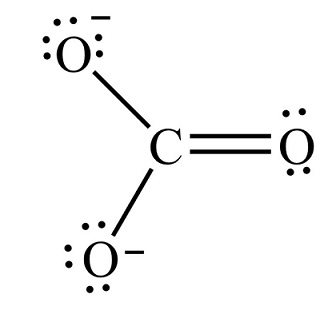
Confused about oxidation state in Secondary 3 Chemistry? Learn how to find the oxidation state of Carbon in carbonate ions and carbon dioxide, then determine whether Carbon is oxidised, reduced or unchanged.


A common mistake is to assume that the oxidation state of Carbon in the carbonate ion, CO₃²⁻, is −2 because the ion has an overall charge of −2. However, the charge of an ion is not the same as that of an individual element. To find the oxidation state of Carbon, start with Oxygen. Oxygen has an oxidation number of −2. Since carbonate contains three Oxygen atoms, Oxygen contributes −6 in total. As the carbonate ion has an overall charge of −2, Carbon must have an oxidation number of +4. Now, can you use the same approach to find the oxidation number of Carbon in carbon dioxide?

Take a moment to work out the oxidation state of Carbon in CO₂ before checking the solution. Have you got the correct answer? Scroll down to see how a Superstar Teacher mentor explains the solution to a student who asked this question through instant homework help.

The explanation can help strengthen understanding and build confidence when tackling Secondary Chemistry questions independently. For students who need help during homework or revision, on-demand homework help provides guidance when it is needed.


homework help-google search

Real mentors, Real-time answers

Patrick

  • Describe the change in Carbon from CO32minus to CO2 (Oxidised/reduced/no change)
  • Hi
  • Pls give me a while as I take a look at the question :)
  • The carbon has no change because the oxidation state of C in CO3 2- and CO2 i s the same at + 4
    CO3 2- + 2H+ --> CO2 + H2O
  • I hope it helps you understand well, do give me a 5 star review after the session :)
  • I thot CO3 2minus is -2
  • Yes, but each O is - 2, so the oxidation state of C itself is -2 + 6 = +4
  • we are looking specifically only at the oxidation state of C itself, not the whole CO3 2-
  • AHHH I see
  • Thank you!

Struggling with tricky questions? Our platform offers expert homework support that's just a click away.

Try the smarter way to learn today!

More than 117,000

active learners

96% rating

on Google & Facebook

46 mins avg.

time spent daily

Hear from our students

Whenever I get stuck on my homework, I use the Instant Homework Help feature to get quick support. The tutors are really kind and patient, and some even explain things in different ways until I understand. It helps me feel more confident about my schoolwork.

Jay Han

Pri 5, Chongfu School

I'm taking my PSLE this year, and the Homework Help feature has really made a difference. Whenever I face a difficult question, I can ask for help and get answers fast. It makes doing homework less stressful and helps me improve in all my subjects.

Chloe Tan

Pri 6, Ahmad Ibrahim Primary School

Instant Homework Help is one of my favourite features on Superstar Teacher. When I struggle with a tough question, I get help right away, which clears up my doubts and saves time. It's helped me become more confident and motivated in my studies.

Kadyn Shen

Sec 2, St Patrick School

View more testimonials

Get in touch
with us!

Sales and General Inquiries

Adeline Lee, +65 9845 9565
enquiry@superstarteacher.com

Follow Us