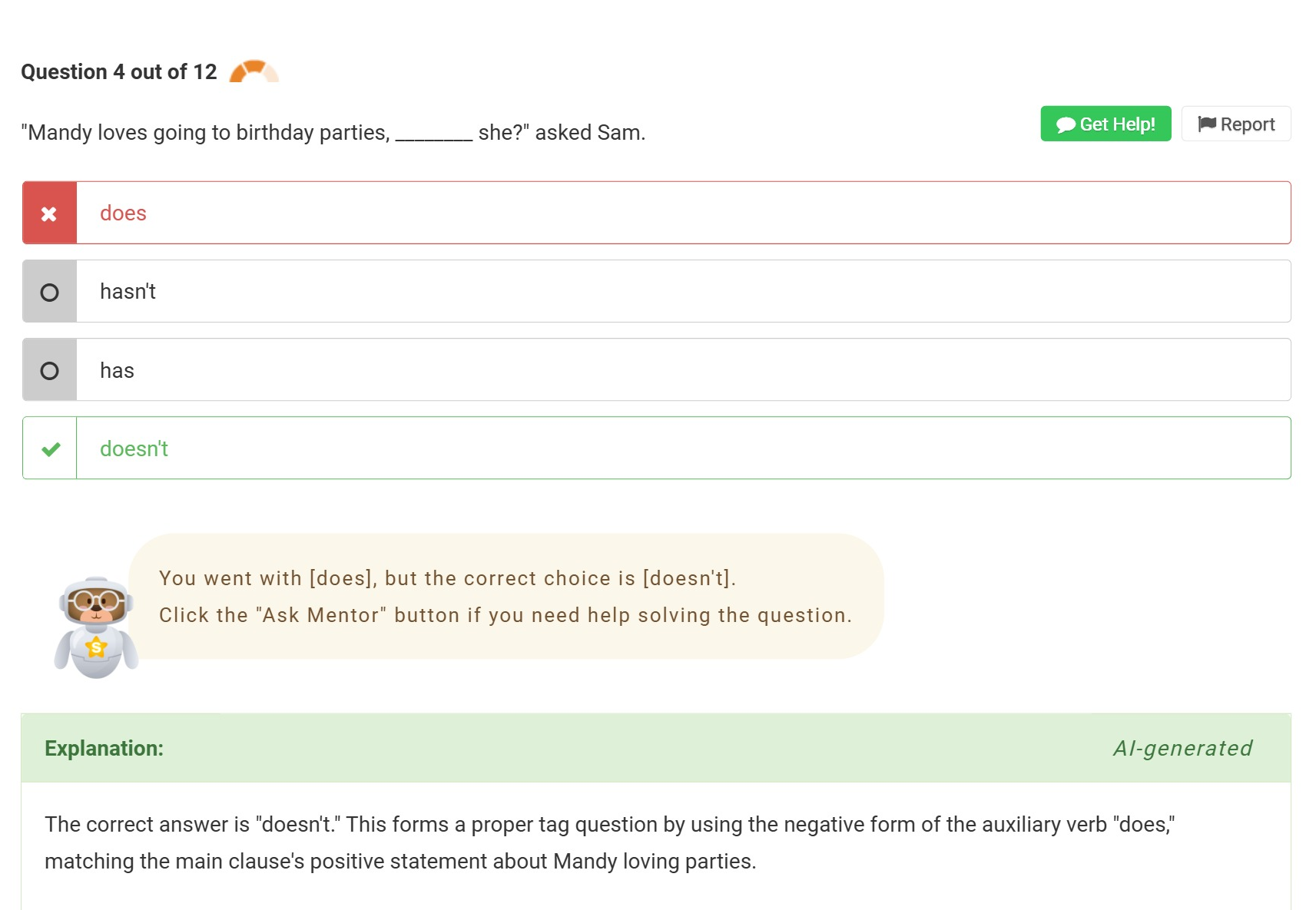
Can You Spot the Mistake? In Secondary English editing, even a small preposition can make the difference between a correct and incorrect sentence. One common challenge involves idioms, where students must understand how words work together rather than rely on what sounds familiar.
Consider this question:
In three hours, my tour was complete. The general impression upon my mind was sadness. No trees and little vegetation to speak on.
Identify 1 mistake from the sentence above.
Speak Of vs Speak On: What Is the Difference?
The answer may seem straightforward, but many students overlook the mistake because they confuse two similar expressions: “speak of” and “speak on”. Understanding the difference can help students tackle similar editing questions with greater confidence.
The key lies in understanding the meaning of each expression.
- “Speak of” means to mention something or refer to something worth noting. For example, “There was little food to speak of” means there was hardly any food worth mentioning.
- “Speak on” means to give a talk or discuss a particular topic. For example, “She will speak on climate change” means she will give a talk about climate change.
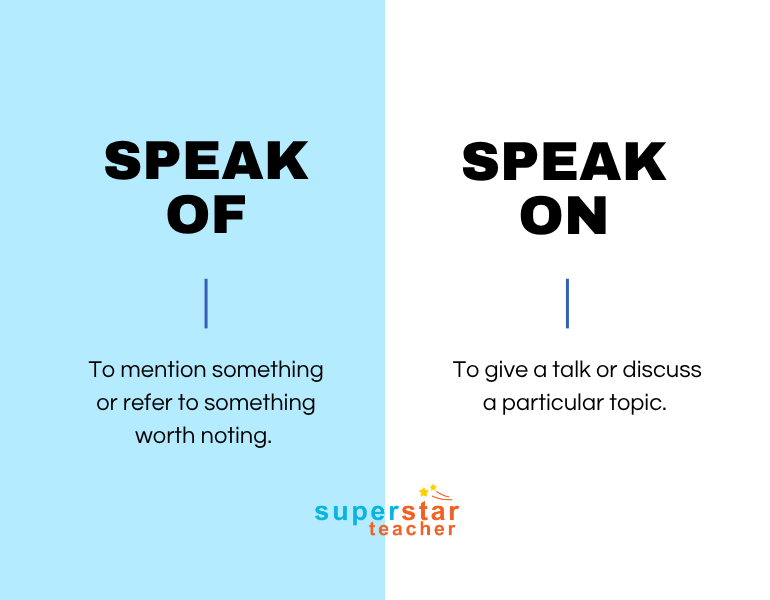
In the question above, the sentence describes the lack of trees and vegetation during a tour. It does not refer to giving a talk. Therefore, the expression “to speak of” fits the context.
This is a useful reminder for Secondary English editing: always consider the meaning of the entire sentence when checking an idiom or preposition.
Build Confidence in Secondary English Editing
Learning idioms takes more than memorising definitions. Students need to recognise how expressions work in context and apply that knowledge to unfamiliar questions.
With Superstar Teacher’s instant homework help, students can seek on-demand homework help when they encounter confusing English grammar questions. Understanding why an answer is correct helps students become more confident and independent learners.