Photosynthesis is one of the most important topics in Primary Science. It explains how green plants make food using sunlight, carbon dioxide and water. But what happens when different parts of the same leaf have different colours? This can make photosynthesis questions surprisingly challenging, especially when a question tests more than just the basic definition.
With Photosynthesis now taught in Primary 6 from 2026, students may encounter questions that require them to apply their understanding of chlorophyll, carbon dioxide and how leaf colour affects a plant’s ability to make food. These application questions can also be useful preparation for the PSLE.
Consider this question on Photosynthesis about a variegated leaf, where different parts of the leaf have different colours:
The diagram below shows a picture of a variegated leaf (leaf with different colours).
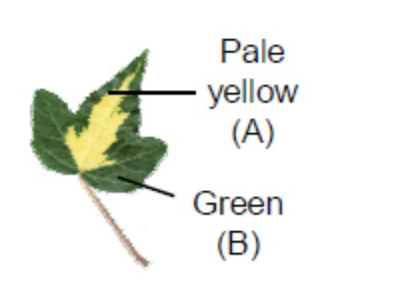
Which of the following statement(s) about the variegated leaf is true?
- Given the same condition, part B of the leaf is able to make more food than part A of the leaf.
- Part B of the leaf is able to attract more animals to the plant than part A of the leaf.
- Part A of the leaf contains the same amount of chlorophyll as part B of the leaf.
- Part A of the plant takes in more carbon dioxide than part B of the plant.
At first glance, the question may seem to test simple facts about photosynthesis. However, the key lies in understanding what the different colours tell us about chlorophyll and how this affects the rate at which a plant can make food.
The mentor-student conversation below shows how an Instant Homework Help session can break down this challenging question step by step, helping students understand the Science concept instead of simply memorising an answer. Read the solution below to see how the question can be tackled with confidence.