Many Secondary Science students struggle when a Chemistry question goes beyond memorisation and tests real understanding of periodic table trends. This question pushes learners to apply logic across atomic structure, atomic size, ionisation energy, and ion formation in the third period of the Periodic Table.
Before jumping into the solution, attempt the question carefully and focus on how each statement connects to periodic trends instead of isolated facts.
Question on Periodic Table
Four elements identified only as W, X, Y and Z are all found in the third period of the Periodic Table. Use the following information to determine the most likely order of arrangement of these elements from left to right in the third period.
I The atomic size of Z is less than that of X.
II The energy to remove the first electron from the atom of Y is greater than that from the atom of Z.
III W forms an ion which has a larger size than an atom of W.
IV X, Y and Z form ions which are smaller than their parent atoms.
This Secondary 4 Chemistry question tests understanding of how properties change across the periodic table, especially how atomic size decreases across a period and how ionisation energy generally increases. It also challenges learners to interpret what happens when atoms gain or lose electrons to form ions.
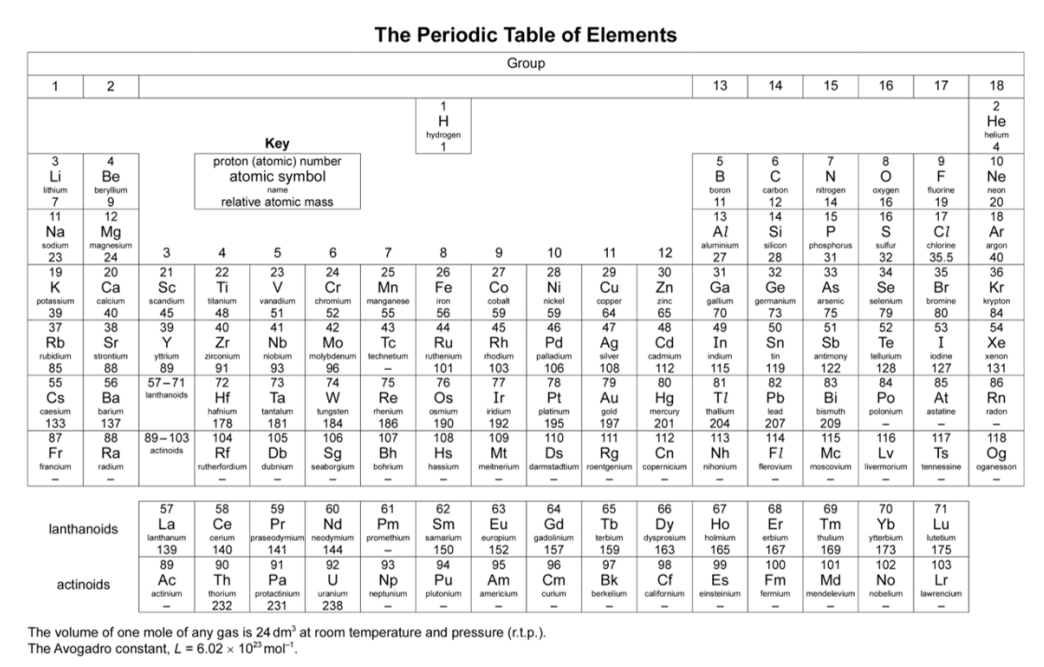
Many students rely on memorisation, but strong performance comes from understanding why these trends occur. For example, across the period, nuclear charge increases while shielding remains similar, affecting both atomic size and ionisation energy in predictable ways.
Scroll down to view the step-by-step mentor explanation and solution. Superstar Teacher provides instant, on-demand homework help designed to turn difficult Secondary Science problems into clear, confident learning moments.