Rheostat: Common Mistakes Students Make in Circuit Questions (And How to Avoid Them)
Recognising a rheostat and understanding how it affects resistance, current, the ammeter reading and the brightness of a lamp can make the difference between choosing the correct answer and falling for a common misconception. Circuit questions are among the most common topics tested in Secondary Science Physics, yet many students lose marks because they overlook the important components in the questions. Test your understanding with the question below before viewing the solution.
Circuit Question with Rheostat
Which of the following statements is correct for the circuit shown below?
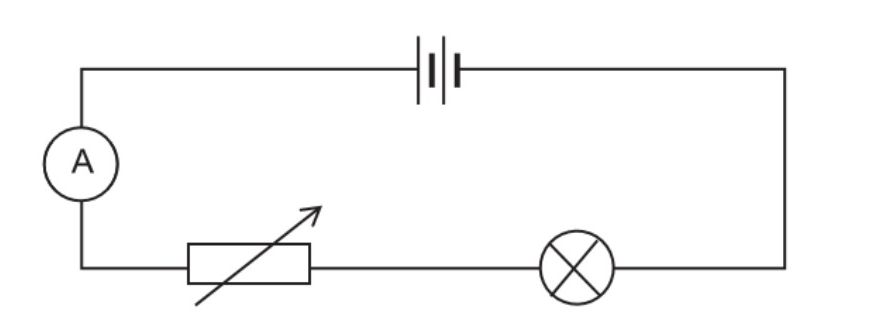
(a) The brightness of the lamp increases as the resistance of the rheostat increases.
(b) The brightness of the lamp does not change as the resistance of the circuit cannot be adjusted.
(c) The brightness of the lamp does not change as the e.m.f. of the battery remains the same.
(d) The brightness of the lamp increases as the reading shown on the ammeter increases.
Many students immediately focus on the lamp or the battery and forget to identify the circuit symbol with a box and an arrow. This symbol represents a rheostat, which is a variable resistor. Since a rheostat allows the resistance in the circuit to change, the current flowing through the circuit also changes. As a result, both the ammeter reading and the brightness of the lamp can vary.
Before checking the answer, think about how increasing or decreasing the resistance affects the current in the circuit. Can the lamp become brighter if less current flows? Does a constant battery e.m.f. mean the brightness must stay the same?
The mentor-student discussion below explains the reasoning step by step, helping students avoid these common mistakes and become a more confident learner. Looking for instant homework help or on-demand homework help for Secondary Science? Superstar Teacher provides personalised guidance that helps students understand concepts instead of memorising answers.













 Adeline Lee,


